Ask AI

Treating TGCT Beyond the MRI: Restoring Function Through Individualized Care

Clinical Thought
Clinical Thought Start Activity

Released: August 17, 2026

See Activity Collection

This ClinicalThought commentary examines the biology and clinical management of tenosynovial giant cell tumor (TGCT), distinctions between localized and diffuse disease, and the roles of MRI and histologic confirmation in diagnosis and assessment. Learners will explore evidence and practice-relevant considerations for surgery, systemic CSF1R-targeted therapy such as pexidartinib and vimseltinib, treatment selection, monitoring, and longitudinal follow-up, while considering how symptoms, imaging findings, patient goals, and multidisciplinary care guide individualized treatment decisions.

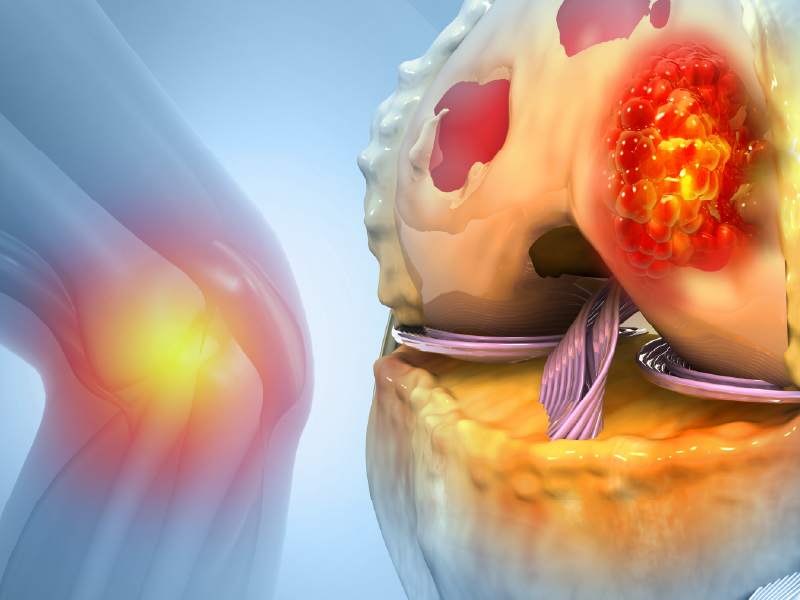
Treating TGCT

Key Takeaways
  • Diffuse TGCT warrants early multidisciplinary evaluation because its infiltrative behavior, recurrence risk, and potential for joint damage differ from localized disease.
  • Treatment decisions should be driven by symptoms, function, joint preservation, and patient priorities and not by MRI findings alone.
  • Approved CSF1R inhibitors, pexidartinib and vimseltinib, have different dosing schedules, monitoring requirements, and toxicity considerations allowing individualized treatment decisions.

Tenosynovial giant cell tumor (TGCT) is often described as benign, but that label can obscure the burden it places on patients. In diffuse TGCT, chronic pain, swelling, stiffness, and progressive joint damage can alter work, education, mobility, family planning, and psychological well-being. The central question is not simply how much tumor is visible on imaging, but how the disease is affecting the individual and what can be done to bring normalcy back to that person’s life.

Understanding the Biology Clarifies the Treatment Strategy
TGCT has a distinctive biology. A small population of neoplastic cells overexpresses CSF1, which attracts

This biology explains why targeting the CSF1–CSF1R pathway can produce meaningful benefit. By disrupting the signaling relationship, CSF1R inhibitors can reduce inflammatory cell accumulation, joint effusion, swelling, pain, and stiffness. In some patients, improvement occurs quickly, even before the full radiographic response is apparent.

Localized and Diffuse Disease Are Different Clinical Problems
Localized TGCT is generally well circumscribed and may be successfully managed with surgery, with a low risk of recurrence. Diffuse disease is more infiltrative. It can extend throughout and around a joint, involve soft tissues, erode bone, and be difficult to remove completely.

Surgery remains an important treatment option, but it may not be sufficient for every patient with diffuse disease. Recurrence is common, and repeated procedures may add morbidity over time. Discussions should happen early among orthopedic oncology, medical oncology, musculoskeletal radiology, pathology, physical therapy, supportive care, and the patient.

The patient is central to the care team. Two patients with similar tumor burden on MRI may have different symptoms, functional limitations, and priorities. Recommendations must reflect those differences.

Diagnosis Requires the Right Imaging and Tissue
MRI is the preferred method of TGCT assessment. It can distinguish localized from diffuse disease and define intra-articular and extra-articular involvement, bone erosion, edema, effusion, and soft tissue extension. Experienced musculoskeletal radiologists should recognize hemosiderin-related patterns that strongly suggest TGCT.

Even when the MRI . Other synovial disorders can resemble TGCT, and the differential diagnosis may include malignant conditions requiring a very different approach. A biopsy can provide important certainty before prolonged observation, surgery, or systemic therapy.

Treat the Patient, Not Just the Scan
Conventional radiographic response criteria do not always capture what matters clinically. Diffuse disease is irregular and can be difficult to assess using a single linear measurement. MRI can be combined with 3D volumetric segmentation or tumor volume scoring to provide a more complete picture, but imaging remains only one part of the assessment.

When considering treatment, ask: Why are we using this drug, and what do we hope to gain? Is the goal to reduce pain, improve range of motion, help the patient return to work, postpone joint replacement, or make future surgery less morbid?

Patients often define success through everyday activities. They want to climb stairs, ride a bicycle, dance, care for their families, or return to exercise. These details may seem small, but they are often the most meaningful outcomes.

Systemic Therapy Should Be Purposeful and Flexible
The availability of potent CSF1R inhibitors has changed the treatment landscape, but measurable disease alone is not a reason to begin therapy. Some patients can be managed for substantial periods with observation, rehabilitation, analgesia, and other supportive measures. Systemic therapy should be considered when symptoms, functional impairment, progressive joint damage, or surgical morbidity justify intervention.

When treatment is appropriate, selection should be individualized. Pexidartinib and vimseltinib have different dosing schedules, monitoring requirements, and toxicity considerations. Patient preference, comorbidities, baseline laboratory findings, fertility and pregnancy plans, convenience, and tolerance all matter.

Because TGCT is usually chronic and nonmetastatic, even lower-grade toxicities may become unacceptable over time. Fatigue, gastrointestinal symptoms, rash, liver abnormalities, edema, weight gain, and hypertension can affect adherence and quality of life. Pexidartinib also carries a rare but potentially severe cholestatic hepatotoxicity that requires structured monitoring. The goal is to achieve benefit without allowing treatment burden to replace disease burden.

Dose adjustments, interruptions, and drug holidays therefore may be useful. In practice, some patients maintain benefit with lower doses or regain benefit when treatment is restarted.

Follow-up Should Remain Symptom Driven
During treatment, focus on symptoms, function, laboratory monitoring, and tolerability. MRI can document the disease course, but a change on imaging should not automatically trigger a treatment change.

The same principle applies after therapy is stopped. Follow-up may initially include periodic clinical review and MRI, with longer intervals over time for stable patients. If radiographic recurrence is present but the patient remains asymptomatic and functional, observation may be appropriate. Conversely, new pain, swelling, stiffness, instability, or loss of function should prompt reassessment.

Summary
TGCT management has moved beyond a surgery-only model. We can now combine surgery, systemic therapy, observation, rehabilitation, and supportive care in a way that reflects the biology of the disease and the goals of each patient. The most meaningful endpoint is not simply tumor shrinkage, but preserving the joint, reducing symptoms, restoring function, and helping the patient return to the life that TGCT has interrupted.

Your Thoughts
How do you define meaningful treatment success in TGCT, and how do patient-reported goals influence your decisions about surgery, systemic therapy, and observation?

Poll

1.

In your opinion, which adverse events are most challenging to manage with the CSF1R inhibitors? 

Submit